


CULTURE IS THE ART OF LIVING
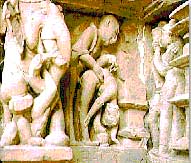
The Kamasutra, the great treatise on the art of sex, was produced in India and it is widely read throughout the world. Ancient artists depicted common sexual scenes of India in their art, be it sculptures or paintings or carvings.
The ancient Maharajahs or kings had special places wherein they kept beautiful women from all over the country to satisfy their sexual needs. But gradually the one man- one woman norm came to existence with the efforts of some great reformers in India.
In India, arranged marriages are an accepted norm and love marriages are a rarity. But now love marriages are becoming common due to westernization and modern education wherein the men and women mingle freely without any inhibitions. Once married, the couple ought to get along with each other well. In case of any conflicts between them they split and live with their parents unlike other western countries where the couple can opt for divorce and then another marriage. In India, a widow or a widower re-marrying is overlooked with great suspicion.
At the grace of some elderly figure in the house the couple get some time to be alone and they don't get sufficient time for a satisfying bout of intercourse. As the woman goes from one pregnancy to another she rarely think that sex is pleasurable and enjoyable. In India, public display of affection between opposite sexes is strictly prohibited. Gay and lesbian activities are also greatly discouraged as marriages are considered to be divine in India. Homosexual relations for men are also illegal in India ,according to Section 377 of the National Legislation.
CLOTHING IN INDIA
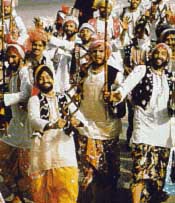
Indian dressing styles are marked by many variations, both regional and religious. One is likely to witness a plethora of colors, texture and styles in garments worn by the Indians. To a foreigner, the powerful attraction, is the colorful attire of the people in India . With globalization, dresses are also getting westernized. Though the majority of the Indian women wear traditional costumes, the men seem to be more comfortable in western clothing. Men from all classes and regions of India wear shirts and trousers. THE SACRIFICIAL FIRE
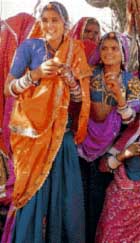
Being most utilitarian and multi purpose, the sari is reigning among both urban and rural females for all rituals and ceremonies. The silk saris, brightly mirrored cholis, colorful Lehangas and the traditional Salwar- Kameez catch anybody's fancy.
The sari can be best called the National dress of the Indian woman. A sari is a rectangular piece of cloth of about 5 to 6 yards in length without any stitches but for the borders. The style, texture and color of the cloth may vary but the sari has an ageless charm. This graceful attire can be worn in different ways and it denotes the status, age, occupation, region and religion of a woman in India. The sari is worn in at least 10 or 15 styles like Gujarathi style, Bengali, Mangalorean, Kannadiga, Kodava, Tamilian, Malayali, etc.

The sari is more than 5000 years old and it is found mentioned in the Vedas (3000 B.C). The sari has survived well for long and it is worn by around 75% of the female population in India. Rani Lakshmi Bai, the Queen of Jhansi, is said to have fought her enemy troops on horseback, wearing a sari! The warm and humid clime of India favors the sari as the best Indian female attire.
CUISINE OF INDIA

TREE WORSHIP
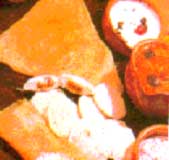
South Indians have rice as the staple food. It is served with sambhar, rasam- a thin soup, vegetables and curd. South India is also known for its Idli- which are steamed rice cakes, Dosa- rice pancakes, vada-made of fermented rice and dal. Kerala is famous for its appams- rice pancakes and fish-based curries. Andhra is known for its hot and spicy curries. Desserts from the South include the Payasam -a form of Kheer from rice and Mysore Pak.
Indians usually round their meals with paan or betel leaves, which go with arecanut, cardamom, etc, which serve as digestive spices.
PILGRIMAGE
Pilgrimage has become a part and parcel of the cultural heritage of India. Our history is interwoven with worship and pilgrimage. Besides giving great source of spiritual and moral enrichment, pilgrimage leads to zest, variety, color and grandeur to a dull and drab and insipid routine. The Indian becomes more vibrant and dynamic after a good pilgrimage. In fact pilgrimage and the related fasts are cathartic in nature. They are a means of purification and they strengthen the spirit within. The lofty Himalayas, the sacred Ganga, the holy Cauvery, the crystal-like Tunghabhadra have all been cherished pilgrim spots of India from time immemorial. There are numerous other pilgrim spots belonging to different religions and faith in India, which attract large faithful and devout crowds throughout the year.
Hinduism - The Rath Yatra, which takes place in the town of Puri in Odisha attracts thousands of pilgrims from all over the country. It is a ceremonial procession of huge chariots bearing Lord Jagannath, his brother and sister wherein stout ropes by ardent pilgrims pull the chariots.
The Kumbh Mela is also a great pilgrimage, wherein the Mela takes place once in every 12 years at different places. A sea of pilgrims takes the ritual bath in the holy waters of the Ganges during this visit.
There are also numerous pilgrim spots which are frequented by the pious Hindu in India like Kasi, Rameshwaram, Haridwar, Dwaraka, etc and rivers like Cauvery Yamuna, etc.
Jainism - Once in every 12 years the ritual anointing of the statue of the Jain saint Gomateshwara takes place at Shravanbelagola, a tiny village in the state of Karnataka. For the Jain pilgrims it is a very sacred and significant occasion, who gather in thousands to anoint the statue with an offering of milk, honey and butter.
The Jains also visit other Jain pilgrim centers situated in Gujarat and other places as part of their pilgrimage.
Islam - For the Muslims the greatest pilgrim center is Mecca, for which a visit once in their lifetime is considered very meritorious. In India, the Jama Masjid in Delhi is of great significance. The Muslims visit and offer Namaz regularly at their respective Durgahs and Masjids.
Christians - For the Christians in India, there are some regional pilgrim centers with which they attach great sanctity and reverence. Usually they pray in their respective churches and Cathedrals. Some places like the Velankanni church in Tanjore District of Tamilnadu are places with healing powers according to the Christian pilgrims.
Sikhs -The Sikhs attach great importance with the Golden temple at Amritsar in the State of Punjab. Most of them visit this temple at least once during their life. They also undertake pilgrimage to other Gurdwaras located at different places in India.