


NEW YEAR'S DAY
Though it is not an Indian festival, since the first day of the year in India doesn't start on the first day of the Gregorian calendar, it has been adopted as a festival because of its long association with the British.Greetings and good wishes are exchanged, sweets are distributed, parties are thrown and people start wishing "Happy New Year" right after 12 in the night. People send greeting cards and good wish messages to their friends and near & dear ones .
The Christian majority in India celebrates this festival with traditional gaiety. The day starts with special services in the churches and then begins a round of never -ending festivities, merry-making, dancing, singing and feasting. At mid-night when the New Year is ushered in and the church bells loudly toll to welcome the year, people in large numbers come out into the streets to exchange pleasantries and for lighting crackers. The New Year's Eve has most of the hotels full with lots of fun and frolic that continue till the wee-hours of the next day.
Exchanging costly gifts and starting new work and new accounts on this day has also caught up with the Indian people.
LOHRI
This is one of the famous festivals in the state of Punjab. The origin of this term is not known but some connect it with fire. This festival occurs on the 13th day of January in the month of Paush or Magh, a day before the famous Makar Sankranthi. It is celebrated in the biting cold of the winter season when the winter rains are about to come or have come already.
The festivities include the famous and boisterous Bhangra dance, which ideally suits the occasion since its fast movements generate enough heat in the body to fight off the freezing cold. On Lohri, the dancers perform around a fire in a ring shape. The fire is offered "Chivra"or beaten rice, "Meva" or dry fruits, "Til-gur-revri" or sesame seeds sweet preparation and "gajak" another variety of sweetened sesame seeds. Then the fire becomes the deity of the occasion.
Astrologically the 13th and the 14th January is that span of period when the sun becomes mobile towards the north. This tilt in movement changes the amount of heatness reaching the earth, particularly in the northern snow-clad areas. The people having experienced the biting cold welcome the warm sun rays by celebrating this festival. Til, meaning Sesame seeds and Rorhi meaning a form of sweet jaggery in Punjabi are meant to keep the body warm. So these two terms Til+ rorhi combined to form Tilrorhi, which eventually corrupted to form the name Lohri.
Its special significance for the agriculturist's culture is because it marks the beginning of a new financial year because on this day they settle the division of the products of the land between themselves and the tillers. Women folk remain busier because they also participate in the "Gidda" dance and the youngsters indulge in a lot more acrobatics to the mesmerizing rhythm of the Dholak and the Nagara.
Lohri has spread far and wide from its place of origin and now mostly the Punjabis do not only celebrate it in India but also abroad in many countries with great verve and style.
PONGAL
Celebrated almost at the same time when "Lohri" and "Makar Sankranthi" are celebrated in the north, Pongal is the most popular festival of the Tamilians. A harvest festival honoring the Sun God and the lord of rains, Indra, Pongal also symbolizes a thanks-giving festival for the plentiful paddy crops that the farmer has harvested during the mild winter months in South India.
Literally meaning "Boiling over", Pongal, signifies the advent of prosperity. Pongal is normally celebrated over a period of four days, starting on the 13th January. Since the calculation to determine the day is based on the solar calendar, the date doesn't change. It is considered a very auspicious occasion when the Sun transits the Capricorn sign. A rich and abundant harvest of paddy and other crops depend on the availability of good rain, as most of the rivers in Tamilnadu are not perennial. Hence the invocation of the Sun God and the God of Rain at the time of Pongal.
As is customary, cleaning of every house a few days prior to the Pongal festival is an indispensable ritual. Not only every house is cleaned, but it is also dusted and whitewashed. Wearing new clothes on Pongal is also customary. Attired in a new "Lehanga" and half sari for young girls and lungi and angavastram, the men, women and children prepare themselves for celebrating the first day called Bhogi Pandigai. This day is dedicated to Indra, who is also called Bhogi. It is believed that on this day Lord Krishna had urged the people to neglect Indra and not worship him. People take oil bath on this day. Using rice paste "Kolam" is drawn and this represents the Sun. The following items are arranged to celebrate Pongal; Sandalwood paste, vermilion, mango saplings, coconut fronds, sugarcanes, banana leaves, ginger pieces, white flour, new vessels for cooking, turmeric, and a "thali" or metal plate in which the sun is viewed.
The next day is the first day of the next Tamil month "Thai". This invariably falls on the 14th of January. In this day, the outside of the house is decorated with strings of mango leaves tied neatly. The vessel to be used for cooking is decorated with vermilion and haldi dots. The vessel and its contents are placed under fire by the daughter-in -law or the lady of the house. Dishes prepared on this day are of two varieties: the salty one is called "Ven Pongal" and the sweet one is called "Chakkarai Pongal". The milk is boiled and some newly harvested rice and jaggery are added to it. Once this is cooked, spices are added for taste and flavor and after performing the puja, it is offered to the Sun God. The boiling over of milk with rice is supposed to indicate plenty and prosperity.
On the morrow of the Pongal is a day of thanks giving to the cattle, which have served the men and their families throughout the year. On this day a special race called "Manju Virattu" is held when their owners beautifully decorate the bulls and driven out into the open with moneybags tied to their necks. Whoever catches and controls the bull can claim the money. The bulls are driven with special sticks called "Adalikombu".
The fourth day falls on 17th January. It is the last day of Pongal and is known as "Kanum Pongal". It is generally believed to be the period of rest. On this nothing new is begun as it is supposed to be an inauspicious day or "Karri Naal". On this day people prefer to indulge in sightseeing and whirl away their time in merry making.
The fifth or last day of Pongal celebrations is called Kanya Pongal when different preparations of rice and curd are kept in banana leaves or on leaves of the turmeric plant. Then the thing is left in the open so that birds, squirrels and ants may get their share of the newly harvested rice. On this day married women are invited along with their families by their parents or brothers for a grand feast in the afternoon.
The dishes prepared during these days are "Sarkarai Pongal", "Ven Pongal", Dosai and Sambhar, Vadai and Payasam (a sweet rice pudding).
MAKARA SANKRANTHI
When the sun transits the Makar (Capricorn) this festival is celebrated. The special significance of this day is that on this day the lunar and the solar calendars are synchronized. It normally falls on January 14th. It is the day, which marks the beginning of the auspicious time again for performing marriages and other ceremonies. "Sankranthi" means change or a particular form of transgression, as during this time the Sun starts to travel northwards.
Makar Sankranthi is also called "Uttarayan Sankranthi" .On this day the devotees in thousands take a holy dip in the Ganges and other holy streams. At Ganga Sagar where the Ganges confluences with the Sea, a grand fair and festivities are held on this day. This is an auspicious day for giving alms. Edibles made of sesame seeds are donated liberally. Giving of uncooked lentils and rice called "Kichadi" in local parlance is also held very meritorious. This "Daan" ceremony is celebrated in the eastern part of the country very elaborately. In some communities, the affluent families weigh things like Kichari, edibles, warm clothes, quilts, blankets, etc against their infants in a balance to be given off as alms.
Despite the differences in the manner of celebration with different names, Makar Sankranthi or its derivatives Lohri or Pongal is a very joyous and auspicious occasion.
MAUNI AMAVASYA
Falling on the fifteenth day of the dark fortnight of Magh is this unique festival called Mauni Amavasya, that is the moonless day for observing the vow of silence. Magh is one of the most sacred months among the pious Hindus. The uniqueness of this festival is that it is the only day when holy men and the devout remain silent.
Bathing on this day in the holy waters like the Ganges, eating frugally, visiting temples and religious shrines, and listening to discourses by holy men are considered to be meritorious. The Magh- Mela in Allahabad attracts millions of devotees to the holy bath at the confluence of the Ganges and the Yamuna. The holy men and Naga Sadhus take bath here. It is a treat to watch scores of unclad or scarcely clad holy men taking bath at the Sangam amidst great fanfare and the police bandobust at daybreak when temperature on the river surface may be below zero degree.
On Mauni amavasya day, traditionally Lord Vishnu is worshipped and the "Peepal Tree" is religiously circumambulated. The purpose of observing silence on this day is said to be sharpening our concentration power and living in total communion with the Lord Almighty.
SANKAT CHAUTH
This day falls on the fourth day of the dark half of Magha (Jan- Feb). On this day "Vrata" is observed in the honor of Lord Ganesh and it ensures wisdom, trouble-free life and prosperity. After the early morning bath and observance of the routine piety rituals, a pitcher and Ganesh idol are installed and worshipped with sweets and balls made of jaggery and sesame seeds. Moon-god and Rohini are also worshipped. At night, after the moonrise, the fast is broken after offering the moon, the sacred water called "Arghya". It has a related legend which claims that it was the great sage Markandeya who advised a dethroned king to keep fast on this day to regain his lost glory. He did so and everything was well for him.
Lord Ganesh is said to be the Lord who can remove all obstructions from one's path to success. Hence his worship on Sankat Chauth. It is believed that keeping fast on this day ensures trouble-free year ahead.
VASANT PANCHAMI
Vasant is said to be the prince of all seasons, when the whole nature swoons in ecstasy. So the ancient Hindu calendar started with this season. Vasant Panchami or Sri Panchami is celebrated on the fifth day of Magha (Jan- Feb). This day is specially dedicated to Saraswati, the Goddess of learning, wisdom, and fine arts.
On this day, robes, yellow in color are traditionally worn, taking clue from the fields wearing a mustard flowers' brilliant color. This color also signifies maturity and ripeness. The "Prasadam" for the Goddess varies from community to community. Some have "Ber"- a kind of plume that is found in abundance in North India, and "Sangari"- a kind of bean that grows in the root of the radish plant are offered as prasadams. Along with these two, some "Burfi" sweets, which are yellow in color and marigolds, are placed on a "Thali" in front of the deity. The younger girl of the family normally begins the worship.
Goddess Saraswati is selected for worship on this day since she is a female deity free from any negative attributes and also appears very graceful. Since she is associated with fine arts, music concerts and poetic symposiums are held on this day all over the country. Vasant Panchami is rarely held as a holiday now in India. When it was taken as a holiday long before, kite -flying was followed in almost all the households of north India.
MAGHI POORNIMA
The full moon day of Magh (Jan-Feb) is known as Maghi Poornima. It is a great bathing day and is as important as Karthik Poornima. The dead ancestors are offered libations, and the poor are given clothes, food, money, etc. Then Brahmans are fed and given "Daan- Dakshina" according to one's means.
On this day great bathing festivals are held at various places along the banks of the holy rivers like the Ganges, Yamuna, Sarayu, Narmada, Tapti, Kaveri, Krishna, etc. A bath in the sea at Kanyakumari or Rameswaram or Puskhar or at the sacred tank in Kumbakonam is considered to be very meritorious. The Magh Mela at Prayag near Allahabad held on this day is very famous in India. More than a million devotees assemble at the confluence of the Ganges and the Yamuna and earn merit.
Float festival
On the full moon day of Magh, the float festival is celebrated at Madurai in Tamilnadu. Madurai has a temple dedicated to Goddess Meenakshi. Magh Poornima happens to be the birthday of King Tirumala Nayak who builtMariamman Teppakulam which is a few kms to the east of Madurai. With the accompaniment of music and devotional songs, the highly decorated and illuminated floats are taken. Lakhs of pilgrims assemble at the city to witness this grand event. On this day, the images of Meenakshi and Lord Sundareshwara are mounted on floats and taken to the famous temple.
MAHA SHIVARATRI
On the "Triyadashi" or the thirteenth day of the waning moon fortnight in the month of Phalgun falls the festival of Maha Shivratri, symbolizing the marriage of Shiva and Parvathi. This day comes sometimes in the latter half of February or beginning of March about a fortnight after the colorful festival of Holi.
While the unmarried worship Shiv - Parvati to allow them the same kind of marital bliss as they enjoyed by bestowing a husband of their choice, the married pray for their husband's prosperity and long life. The devotees spend the whole night in meditation, chanting the holy name, reciting Shiva- Mahima Strota and Shiv Tandava Strota. The lingam, the symbol of Shiva is worshipped with Ganjalal, milk, curd, honey and ghee. Bel (Wood apple), Dhatura fruit and "Aak" flowers are the special favorites of the Lord.
Since Shiva is the top most popular deity of the Hindu fold of India, his marriage is celebrated elaborately. It is the only occasion in entire Hindu calendar when a marriage is celebrated with so much fanfare. The hub of the activity of this festival is the temples and not the homes. About 4 p.m onwards people come to the temple with some milk, bel fruits and flowers. Drinking a special drink made from almonds, pistachios, milk, honey and Bhang (cannabis Indica) is held very auspicious. After the pooja the devotees gather around Shiva's idol and sing bhajans and devotional songs. Special pujas are held at Varanasi, Tarkeshwar, Baidyanth, Walkeshwar, Rameshwaram and Mahakal in Ujjain.
DIWALI
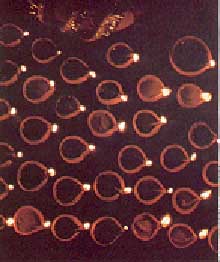
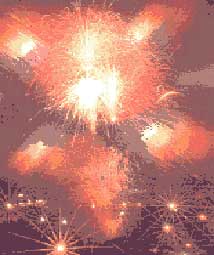
The celebration of Diwali starts from the early morning. People get up early in the morning; tidy their houses, decorate their houses with arches and festoons, and take oil- bath. In the evening they place earthen lamps filled with oil and cotton wicks on the sills and the boundary walls of the houses. Gifting sweet packets and other items are also part of the Diwali custom. When all the lamps have been lit, the younger members of the house start bursting crackers and the older ones set out to greet their friends and relatives.
https://www.diwali-greetings.com/ Free Diwali Greeting Cards and Diwali E-cards
KARWA CHAUTH
Married ladies observe Karwa Chauth on the fourth day of the dark half of Karthik, during October- November, in order to ensure prosperity and long health of their husbands. Widows and unmarried girls normally don't participate. The married women keep a strict fast on this day.
Shiva, Parvati and their son Karthikeya are worshipped along with ten Karwas or small earthen pots with spouts filled with sweets. The karwas are given as gifts to the daughters and sisters. At night after the moon appears they break their fast after offering water to the moon. Married women receive gifts from their parents, brothers and husbands. On the day before this day, the mother- in -law sends eatables to her daughter-in -law to eat before the fast, as she would be in her parent's place. Women join and eat before sunrise, fruits, milk, oranges, sherbet, tea, coffee, puri, aloo, etc and whichever they fancy.
Newly married girls wear their Lehanga and Chunni. Young ladies, as they are not supposed to do any house-hold work, crowd around mehndiwallahs and the churiwalli or Bangle-seller and adorn their hands with henna and beautiful color bangles. Women who do the pujas wear roli teeka on their foreheads and at the hair partings. Women offer water to the moon by holding a lamp in one hand and with the right hand pour water on the ground seven times along with pieces of broken puas. The ceremony ends with a grand feast for the whole family.
SKANDA SHASHTI
Skanda Shashti is celebrated in South India with great fervor and devotion in the Tamil month of Tulam during October- November. Skanda, the second son of Shiva, also known as Karthikeya or Subramanya was born without the intervention of any female. Shiva cast his seed into the fire and it was received by the Ganges and Skanda emerged and Krittika fostered him.
In South India, there are six places, which are associated with him and are considered holy. At these places Skanda shashti is celebrated with thousands thronging the temples. It is the day, when Taraka, the great demon who was a nuisance to the gods was defeated. The festivities begin six days before the shashti. According to mythology, the devotion offered on this day brings prosperity and happiness to ones life.
KARTIKA PURNIMA
The Hindus celebrate this day as a day when God incarnated himself as Matsya avatar or Fish form. The aim of this avatar was to save Vavaswata, the seventh Manu, and the progenitor of the human race from the destruction by a deluge. Charities and piety observed on this day are considered to be highly meritorious. People bath in the Ganges and other holy waters, observe fasts, practice charities and meditate on God. It is also believed that on this day Shankara killed Tripurasura on this day. Shiva is worshipped on this occasion.
Big cattle fairs are held on this day. The great cattle fair held at Puskhar Lake near Ajmer in Rajasthan is a great draw, which transforms the scene into a seething color of sea and gaiety. Thousands of camels, bulls, goats, buffaloes and cows are brought here for sale. Camel races are held and thousands of people take bath in the sacred river here.
GURU-PARAB OR JYOTOSAVA
It is one of the most sacred festivals of the Sikhs. Guru Nanak's birthday is celebrated on this day by lighting lamps. This festivity falls on the full moon day of Kartika (Oct- Nov) and is celebrated to commemorate Guru Nanak, the founder of Sikhism. He was born in 1469 at Talwandi about 45 kms away from Lahore and is known as Nankana Sahib. On Guru Parab, a grand fair and festivity is held here and Sikhs from all over the country and even abroad congregate here.
On Guru Parab, Guru Granth Sahib, the Holy Scripture is read and recited inside the Gurdwaras continuously. Processions are carried out, free meals are arranges and prasads are distributed. Similarly other Gurus are also commemorated. The second Guru Parab commemorating the Guru Govind Singh is celebrated in the month of Pausha (Dec- Jan).
CHRISTMAS
The festival of Chritmas or the birth anniversary of Jesus Christ is celebrated with great cheer and enthusiasm by the Christians all over the country. It falls on December 25th and is also hailed as "Bada Din" since from this day the duration of each day is lengthened when compared to the previous days. Though no historical records are there to prove that it was that particular day, people started celebrating Christmas on this day because it was found favorable by the people living in the dark and cold countries.
On this day, people in their best clothes attend special midnight masses in churches. The festivities continue till the New Year's Eve. On Christmas Eve, Carol singing and visiting friends and relatives take place till the midnight. In big cities and towns processions are carried with tableaus depicting the life and teachings of Jesus and his disciples.
Christians beautifully decorate their houses for this day with bells and flowers and make Christmas trees bedecked with bells and flowers and gifts for the children. The Christmas tree reminds people to be unselfish and help others. A mystical character Santa Claus also appears on the Christmas night to give gifts to the children. Hindus and Muslims also now enthusiastically join the Christians in celebrating Christmas these days.