


SCULPTURE
Pallava art played a considerable role in the shaping of medieval cave sculpture in the South. This influenced the Chalukya phase and after the Rahstrakutas conquered the Chalukyas, the tradition of the sculpture of Badami stamped with the Pallava style was carried out and it was fulfilled at the Ellora and the Elephanta caves.
The greatest and artistically the richest of all temples at Ellora, is the Kailashanath temple, which is dedicated to Siva, a favorite of the Rashtrakuta Rulers. Rashtrakuta sculpture reached its peak and maturity at the cave-temples of Elephanta near Mumbai.
From the 9th century, Hindu art conquered every corner of the country. Though in course of time, wider regional schools in sculpture developed, it followed the same directions everywhere with common medieval characteristics. The Chola period of South India from the 10th century to the middle of the 13th century is regarded as the golden epoch of medieval times. The Cholas were devotees of Lord Shiva and they sculpted many statues and temple to this God. During the regime of the Pandyas who succeeded the Cholas, much importance was given to sculpting of the surrounding walls of the temple and erecting tall gateways topped by high pylons called gopurams. Pandyan sculptures were characterized by slim and soft elegance, but they lacked the warmth of the Chola style.
The Vijayangar Empire, which grew as a bulwark against the Islamic invasions from the north, lasted from the 14th to the 16th century. A number of temple structures were erected at Tirupathi, Lepakshi, Srisailam, Kanchipuram, Chidambaram and many other places in the South during the Vijayanagar period.
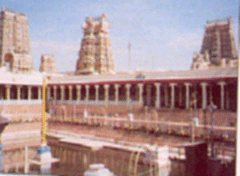
Meenakshi Temple- Madurai
The creative vitality of Southern India found another expression under the Later Chalukyas and a new dynasty of rulers called the Hoysalas of Mysore. By the 11th century, the chalukyas lost power and the Hoysalas took the reigns. The temple of Hoysaleswara at Halebid is an outstanding monument for the prodigality of its sculpted ornamentation. Equally picturesque is the Kesava temple at Belur, the workmanship being equally alluring as at Halebid.
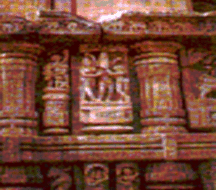
Sun Temple Sculpture
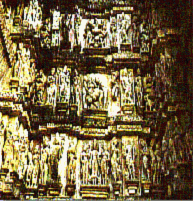
Khajuraho sculptures
By the end of the 16th century, impressive sculpture both in the North and the South of India had ceased and there was a slow decline in the sculptural traditions of the country.