


POPULATION OF INDIA
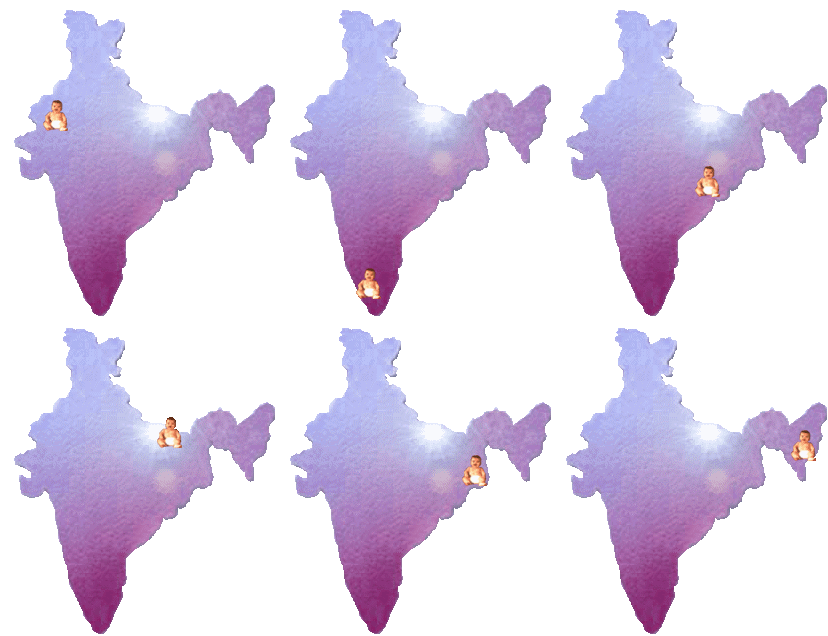
POPULATION CLOCK
For
every minute there are 29 births in India.
Next to the People's Republic of China, India is the most populous country in the whole world. Around 1977, the population was 968 million, and in the 1981 census it crossed the 680 million level. In 1991, it was around 845 millions.
The total population of India as at 0:00 hours on 1st March 2001 stood at 1,027,015,247 persons. With this, India became only the second country in the world after China to cross the one billion mark. The population of the country rose by 21.34 % between 1991 - 2001. The sex ratio (i.e., number of females per thousand males) of population was 933, rising from 927 as at the 1991 Census. Total literacy rate was returned as 65.38%.
The increasing growth rate of population and the good state of nutrition and health are possible, thanks to various programmes. The densely populated areas in the country are Bihar, Maharastra, Andhra Pradesh, Uttar Pradesh and TamilNadu. On an average for India , the density of population is 190 persons per sq.km.Delhi and Chandigarh top the country in terms of density and Kerala is the most densely populated state in the whole country.
To meet the menace of population explosion, which threatens all the economic and social growth, various schemes have been introduced both by the states and the Central government . Programmes on family welfare, voluntary sterilization and temporary birth control are carried on. Efforts are also on to eradicate malnutitirion in the whole of India.
The Indian population is a mixture of people having varied complexions, customs, features and physique, engaged in varied occupations and speaking different languages. They comprise the tall Kashmiris to the sturdy peasants of Punjab, the dark-colored ones of Andhra and Tamilnadu to the short statured Nagas.Their way of dressing and their diets vary widely, yet they maintain the harmony of the one country, which is their "Bharat".
Birth rate
22.8 /1,000
Death rate
8.38 /1,000
Fertility
rate
2.85 children
/woman
Male Life
Expectancy
63.25
Female
Life Expectancy
64.77
Infant
Mortality Rate
57.92 deaths/1,000 live births
Source: 2004 census of India.
Religious distribution of the Population
Religion
%
of Total population
Hindus
81.3%,
Muslims
12%
Christians
2.3%
Sikhs
1.9%,
Buddhists
2.5%
Jains
2.5%
Judaists
0.005 %